❋
GRIEVING WHITE SUPREMACY
“All war is unmetabolized grief.” — Martin Prechtel
Hole. Whole. Holy.
Grieving White Supremacy is for people of European descent who are aching for a space to grieve both the weapon and the wound of white supremacy.
As white people, we are responsible for dismantling the systems that uphold white supremacist policies, laws, and institutions. We are also worthy of our own ancestral healing. These are inseparable parts of the work.
As peoples marked by cultural disconnection and deracination, white communities are called to confront and heal ancestral traumas, allowing us to show up with greater dignity and become more effective allies in the work of collective liberation.
This is a caucus space for people who identify as white.
THE WEAPON AND THE WOUND
“White bodies traumatized each other in Europe for centuries before they encountered Black and Red bodies. This carnage and trauma profoundly affected white bodies and the expressions of their DNA. As we’ll see, this historical trauma is closely linked to the development of white-body supremacy in America.”
— Resmaa Menakem, My Grandmother’s Hands
RITUAL
The grief points to the longing.
We will grieve collectively, internalized white supremacy, how we (and our ancestors) have perpetuated (intentionally and/or unintentionally) these harms and grieve our own ancestral losses resulting in a range of sorrows from spiritual starvation to unbelonging.
We've gotta start somewhere and we have a long, long way to go.
Facilitation Team
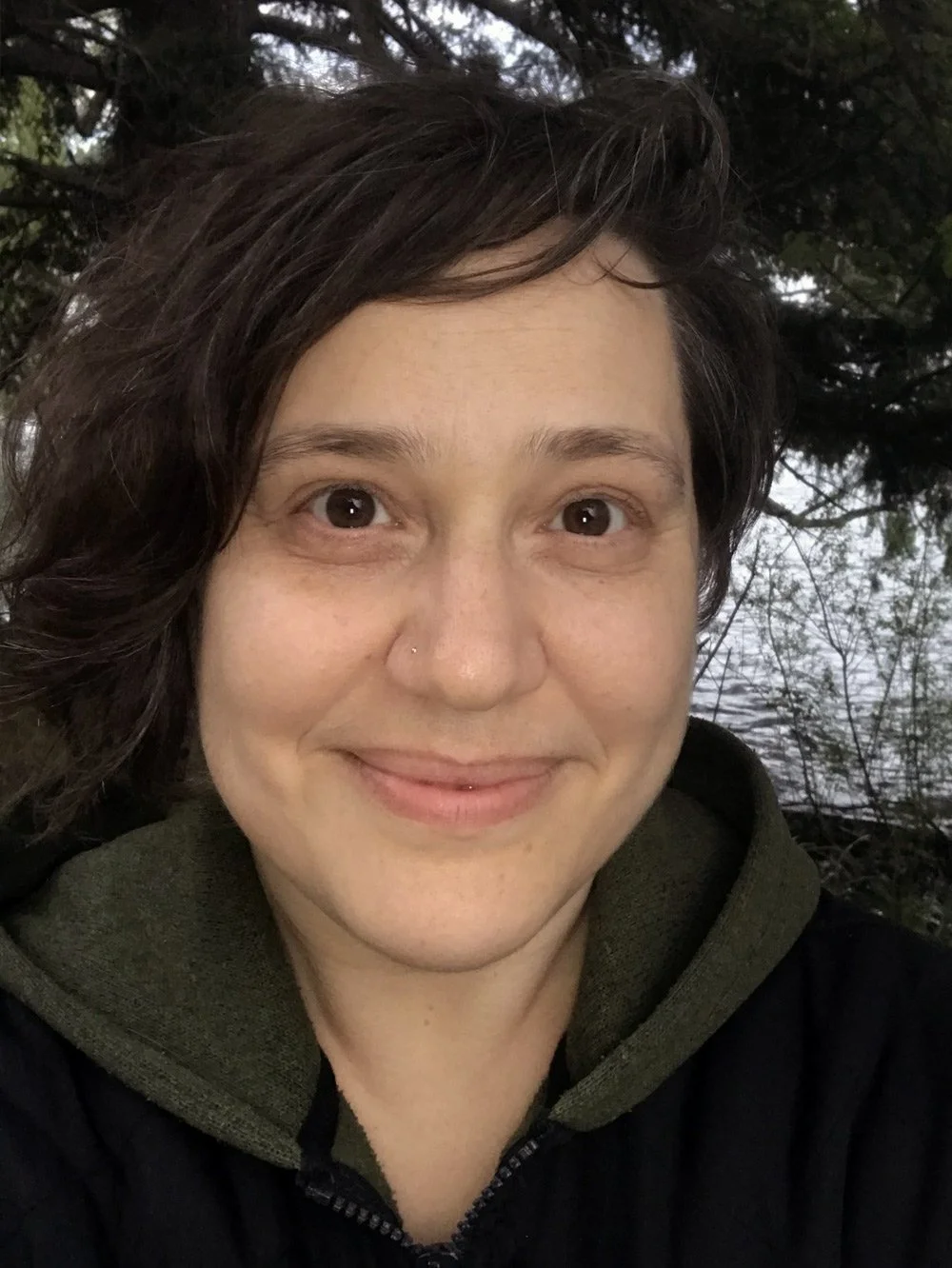
Briana Herman-Brand (she/they)
facilitator
Briana has been working with youth and adults for over 20 years at the intersections of healing and justice. She provides facilitation, training, and counsel in the realms of conflict transformation, embodied trauma healing, social justice leadership, and youth empowerment.
Ancestry: German, Swiss, Scotch-Irish, French, and English
facilitator
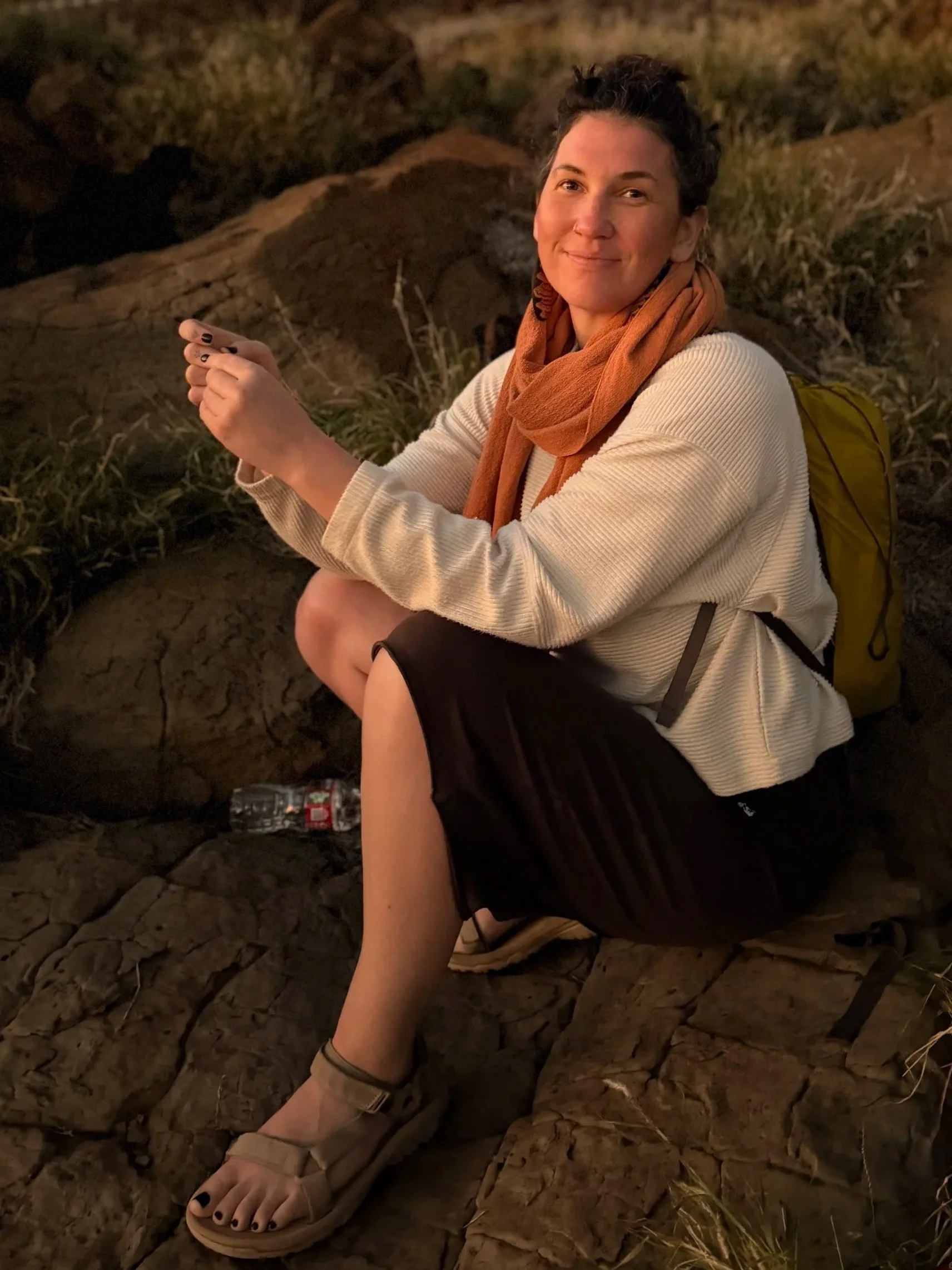
ahlay blakely (she/her)
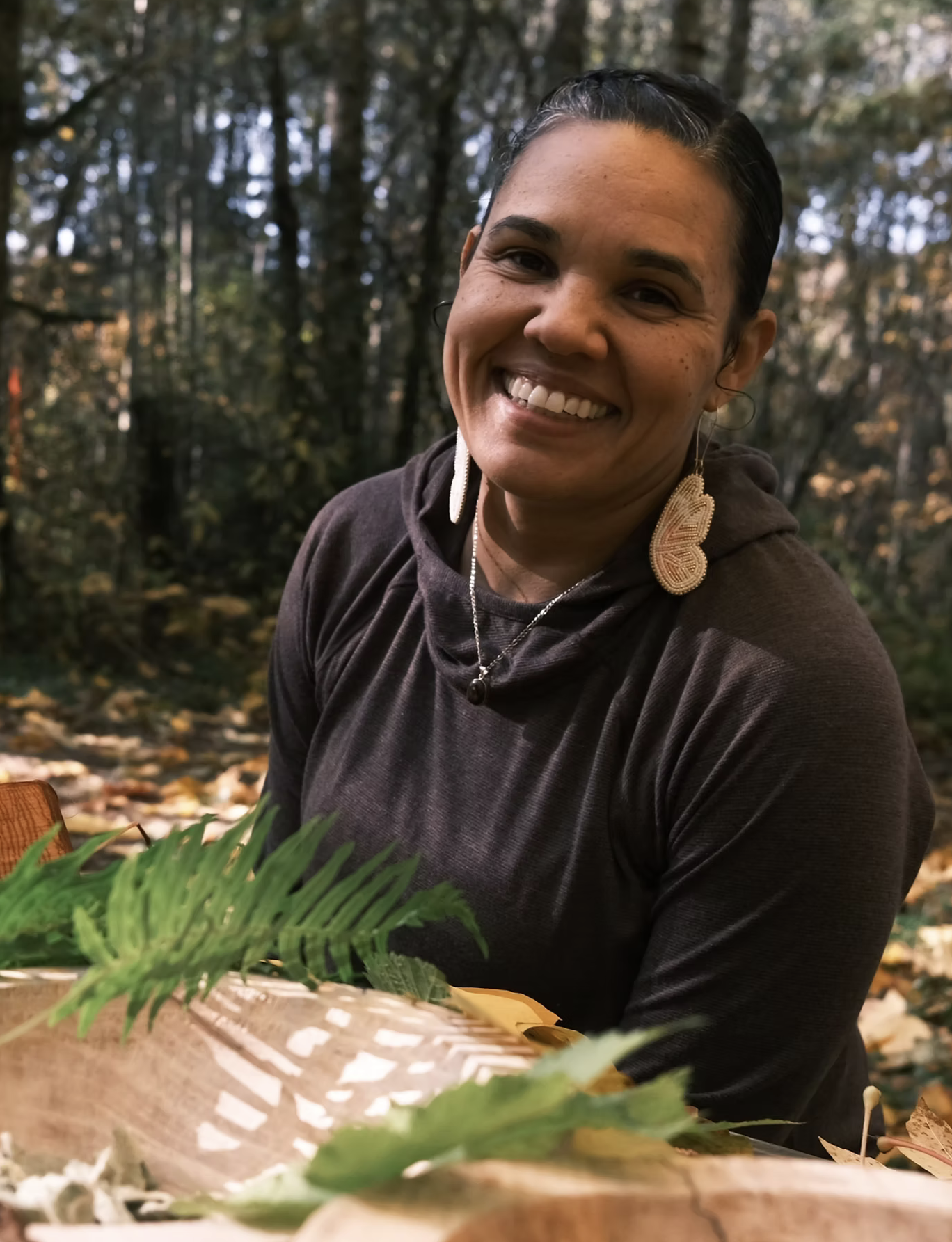
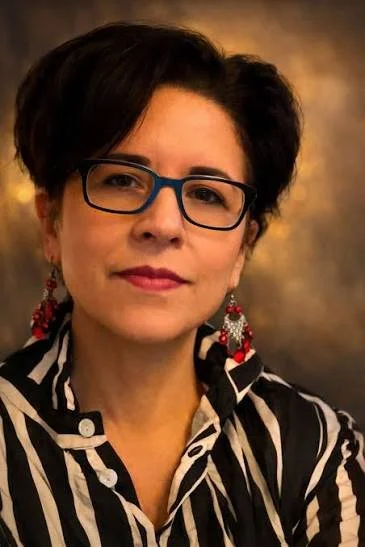
An artist, singer-songwriter, and community organizer committed to healing intergenerational trauma through relationships, song, and ritual. With training in decolonization and anti-racism, her community singing projects aim to inspire collective healing and transformation.
Ancestry: Scandinavian, Polish Ashkenazi, British Isles
MODALITIES AND LINEAGES
Communal Grief Ritual
We will draw upon the Dagara ritual tradition for communal grieving, introduced to the West during the 1990s by Malidoma and Sobonfu Somé of Dano, Burkina Faso. In his book Of Water and the Spirit, Malidoma writes that Western civilization faces a “sickness of the soul” arising from the violent erasure of traditional lifeways under colonialism.
Although ahlay did not study directly with Ancestors Malidoma or Sobonfu, she is a second-generation student who has learned from teachers who worked closely with them.
We recognize the valid concerns surrounding cultural appropriation and neocolonization. This ritual was offered by Dagara elders in response to the harms of unmetabolized grief, and we experience its practice as essential. We believe the need to practice it outweighs the risk of allowing it to disappear. We remain open to dialogue with the communities most impacted by neocolonization about these concerns.
The ritual also follows the footprints of many teachers, ancestors, beings, and lineages, including Joanna Macy; the professional mourning women of Greece and Italy; the keeners of Ireland and Scotland; the mekonenet of Jewish tradition; Francis Weller; Martin Prechtel; Stephen Jenkinson; whales; and the immense, compounded grief of our times.
Somatics
We will also draw upon embodiment practices carried through the lineages of generative somatics and Staci Haines. These lineages integrate healing and justice through the body.
Through a somatic lens, we understand individual and systemic transformation as interdependent, and we practice toward liberation from the body up.
FACILITATION
ahlay Blakely
She/her
Communal grief tender and songstress
Ancestry: Scandinavian, Polish Ashkenazi, British Isles
Briana Herman-Brand
She/they
Healing justice facilitator
Ancestry: German, Swiss, Scotch-Irish, French, and English
WHEN AND WHERE
February 25–28, 2027
Thursday arrival and start time: 1:00 p.m.
Sunday closing time: 2:00 p.m.
This in-person ceremony will be held on the unceded homelands of the S’Klallam and Twana/Skokomish peoples, in what is now known as Union, Washington.
The address will be provided upon registration.
Applications open in mid-September. Priority Application Deadline Oct 11th, rolling admissions until filled.
APPLICATION
Sliding Scale
$900–$1,300
Registration includes shared lodging, all meals, light snacks, coffee, and tea throughout the ceremony.
Meals begin with dinner on Thursday evening and conclude with our closing lunch on Sunday. Three meals will be served on each full day in between.
Financial Access
We believe the cost of this ceremony should not be a barrier if you feel genuinely called to this work. Registration fees also help ensure that the facilitators, organizers, and many hands making this gathering possible are fairly resourced.
We are committed to making this work accessible to a wide range of communities, particularly cash-poor and working-class people and those engaged in community care, social movements, and frontline work.
We have five pay-what-you-can spaces available.
REFUND POLICY
All registrations are nonrefundable. This policy supports mutual accountability and offers some protection for the facilitators and organizers.
If you are unable to attend after registering, you may find someone to take your place. You may also email Rain to ask whether there is a waitlist. The person replacing you must complete their own registration and connect with our registration team at least seven days before the retreat.
During the final seven days before the retreat, our attention moves away from administrative tasks and screen time and toward preparing for our in-person time together.
COVID POLICY
We ask everyone to test for COVID each day before entering the shared space. Depending on the weather, most of our time together will be indoors. Masks will be optional upon arrival.
LAND AND PHYSICAL ACCESSIBILITY
We want to be transparent about the access limitations of the space so that you can make an informed decision about participating.
Moving between the ritual space, dining hall, and lodging involves several short inclines and declines along dirt, gravel, and cement pathways. There are stairs throughout portions of the property, along with wheelchair-accessible routes into the main gathering spaces.
The main ritual space is located at the top of the driveway and is most easily reached by vehicle drop-off for wheelchair users. Once inside, the ritual space is wheelchair accessible.
The dining hall has ramp access from the driveway. Its ground floor, including two bedrooms and an accessible bathroom, is wheelchair accessible.
One guest lodge has two wheelchair-accessible bedrooms on the ground floor, although vehicle drop-off is needed to reach the entrance. Another guesthouse includes two accessible bedrooms. Two of the cottages are not wheelchair accessible.
We recognize that these limitations may affect your ability to participate, and we hold that with deep care. If you have specific access needs or questions, please reach out. We are committed to doing what we can to support your participation and to continuing to grow our accessibility with accountability.
CARPOOLING
For participants who would like to coordinate carpools or other travel logistics, we will provide a self-organizing spreadsheet as registration begins to fill.
TITHING AND RECIPROCITY
The facilitators are fundshifting $1,000 to The Sonder Project, which supports the Dagara community by constructing wells that provide access to sustainable drinking water. You will also be invited to contribute during registration.
This is one way for Western communities to give back in reciprocity for the tremendous gifts carried to the West through Malidoma Somé and Sobonfu Somé, and the gifts that continue to arrive through other Dagara leaders.
QUESTIONS
For questions or inquiries, please contact Rain:
admin@hearthwoodsanctuary.earth
SUGGESTED RESOURCES
These resources are suggested rather than required:
Reclaiming Our Indigenous European Roots
Malidoma Somé: Grief, Ritual and Sacrifice
Sobonfu Somé: Grieving and Recovery